



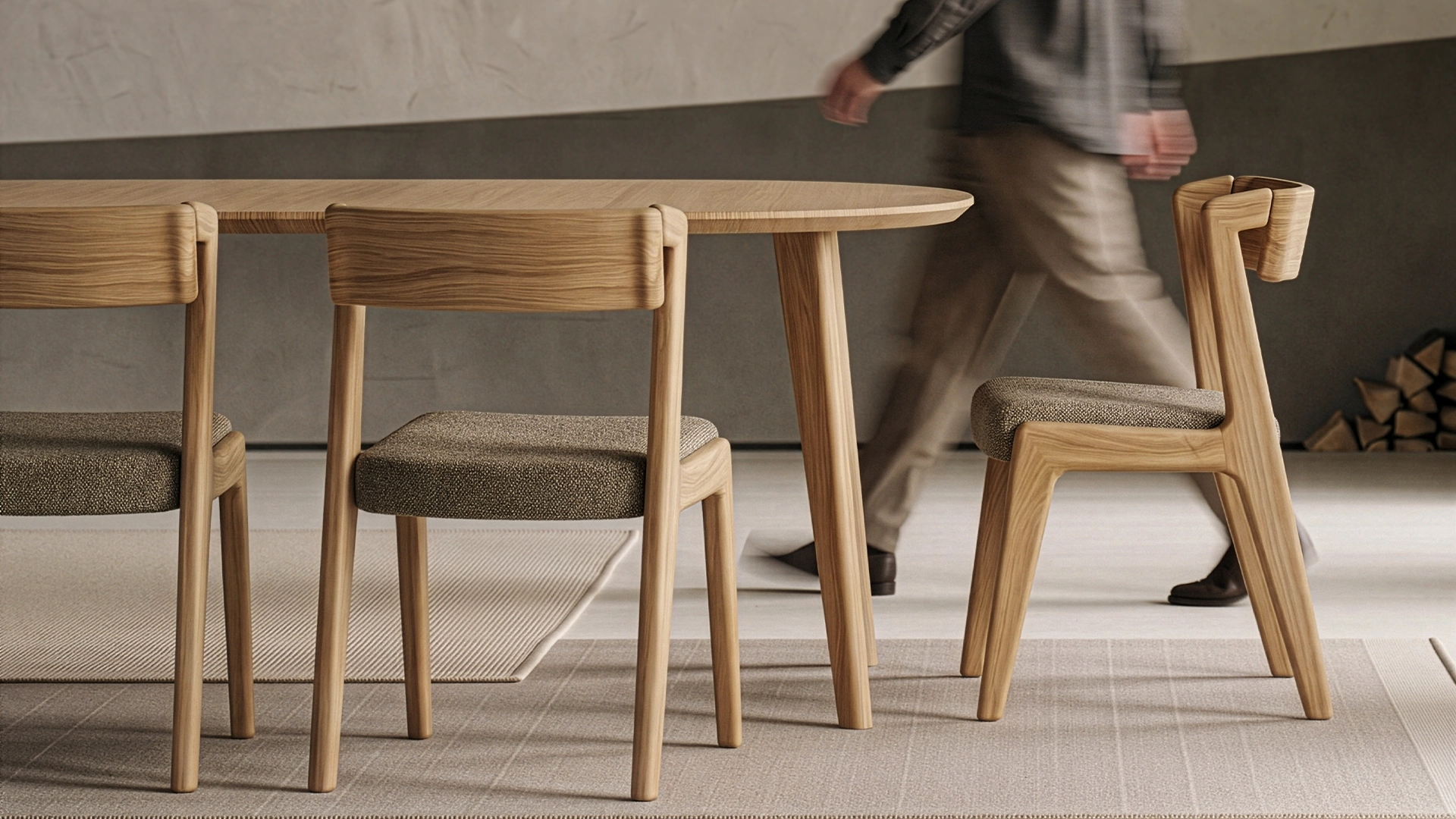
When you receive a table from Studio Tablas, you’re getting weeks of work. That’s no exaggeration—it’s the actual time each piece takes, from the moment the plank enters the workshop until it’s packed and on its way to your home. Here, we’ll walk you through every step of the process, without skipping a thing.
We build to order. Each table begins when you place your order—we don’t keep stock, and we don’t have a warehouse full of prefabricated parts. That means the oak that arrives at our workshop is carved, machined, and finished specifically for your order.
The typical turnaround time is 6 to 10 weeks from the time your order is confirmed. During that time, we’ll send you photos of the process so you can see how your table is coming along.
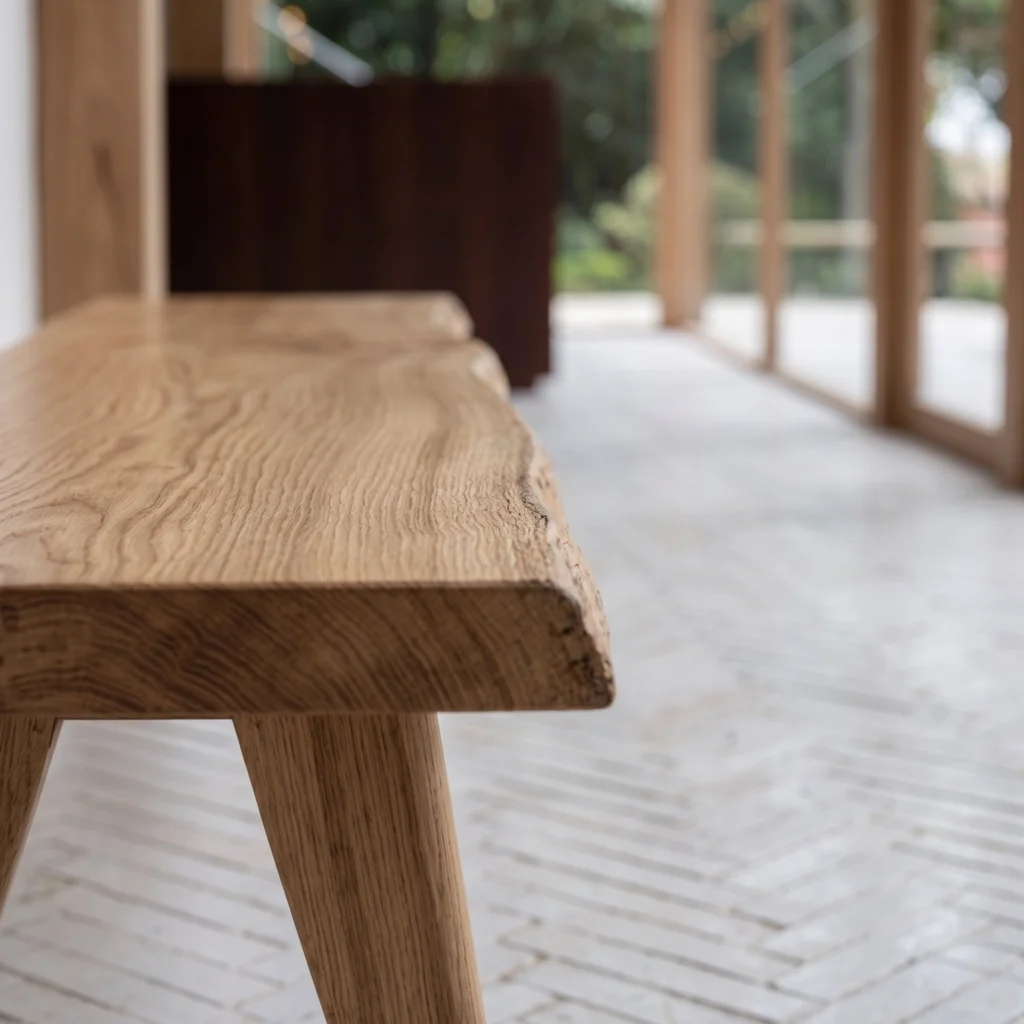
It all starts with choosing the planks. We purchase raw solid oak with FSC certification — a guarantee that it comes from responsibly managed forests. We select the planks with the most distinctive grain and the knots that give each piece its character.
A rough plank is not a flat surface. It has internal stresses, irregularities, and natural curves inherent to the tree. Planing is the process that transforms that plank into usable lumber with millimeter-level precision.
First, we run the board through the planer to create a completely flat surface. That flat surface is used as a reference to run it through the thicknesser, which gives the piece its exact final thickness. The result is perfectly planed wood, ready for use.
A dining table is wider than any single oak plank. To achieve the necessary width, we join several planks together—but doing it right requires precision.
Edging is the first step: run each plank through the edging machine so that the edge is perfectly straight. Only then will the joint between the pieces be invisible.
Next, we use the cookie press to make the cookie holes—small slots into which compressed wooden cookies are inserted to align the pieces with millimeter-level precision.
Finally, we apply wood glue to the joint, insert the dowels, and press the pieces together. Once dry, the resulting board is a single, solid piece where the joint is barely visible.
Before the machine touches the wood, we configure the digital file with precision: layer height, cutting tools, feed rate. Each model — NORMA, MODE or LUMA — has its own optimized file.
CNC machining ensures the geometric precision required by an extendable mechanism. The perfect circle, the precisely square edges, the recesses for the Pöttker mechanism—all within tolerances of tenths of a millimeter. But before machining, the panels are sanded by hand to remove any irregularities that could affect the cut.
Fewer elements, greater quality in each one. Minimalism isn't cold—it's clear. Oak wood provides the warmth that minimalism needs to avoid feeling empty.
After CNC machining comes the most artisanal part of the process. Each model has its own distinctive edge—the detail that gives it its visual and tactile character.
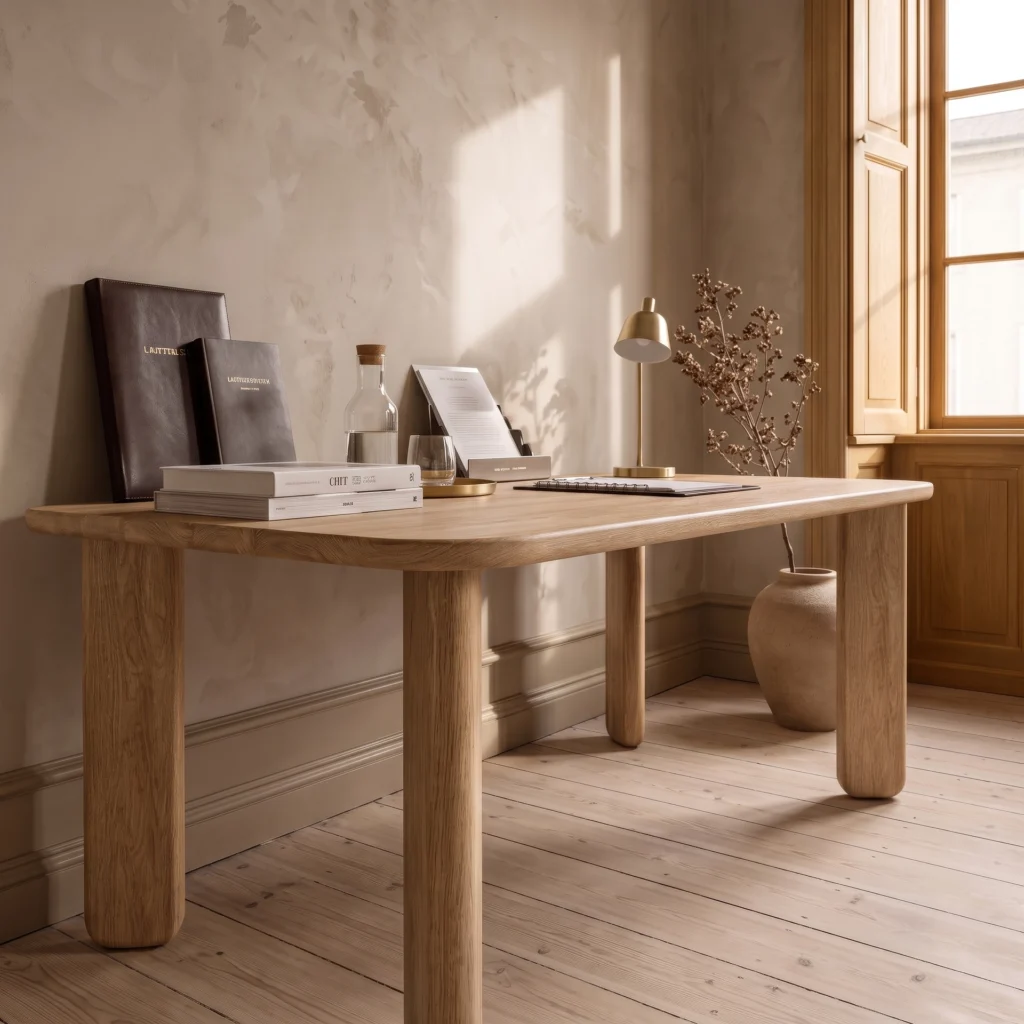
On the MODE table, we milled the lower edge with a diagonal profile that is its hallmark: it softens the transition between the tabletop and the space, and lends a sense of visual lightness to a piece that is 4 cm thick.
After routing comes sanding in several stages, from coarser to finer. Each pass removes the marks left by the previous one. The goal isn't just to smooth — it's to get the wood open and ready to absorb the finish evenly. Poor sanding shows in the final finish.
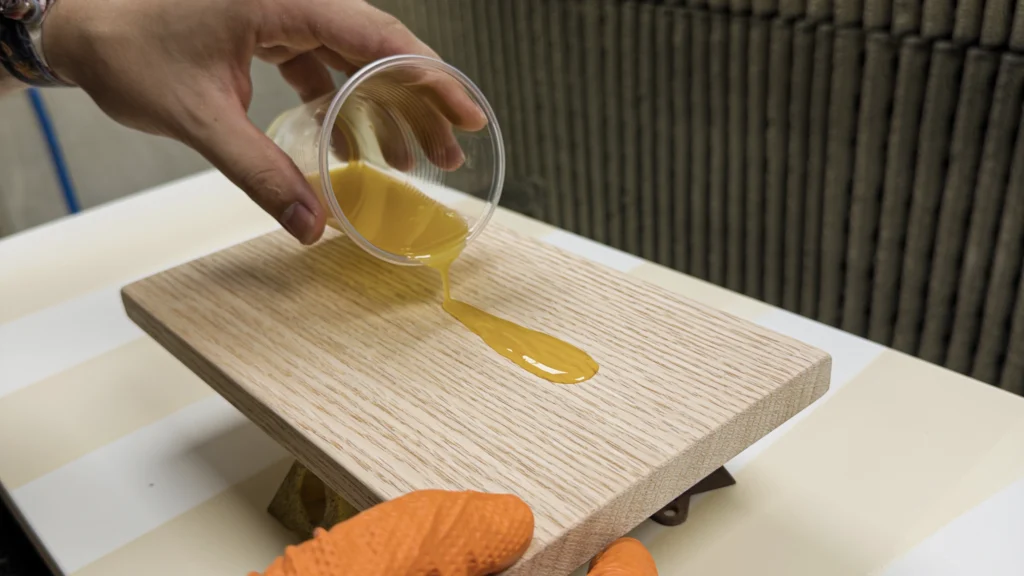
Once the surface has been sanded until it is completely smooth, we apply the stains and varnishes that give each table its final color. The stain penetrates the wood grain and provides the color, while the varnish seals and protects the surface for everyday use.
This finish is resistant to everyday wear and tear—including liquids, moderate heat, and the normal wear and tear of a dining table.
We offer three finishes that complement the most common home decor styles:
The Pöttker butterfly mechanism is installed by hand, with each screw adjusted to the exact tension to ensure smooth yet precise movement. A mechanism with incorrect tension would squeak or be too loose—the manual adjustment ensures that it works perfectly from day one and for decades to come.
Before packaging, each table is opened and closed several times to verify the mechanism works perfectly, that the extensions line up, and that the grain flows naturally from one piece to the next.
A solid oak table weighs between 35 and 55 kg, depending on the model. The packaging is not generic—it is specifically designed to protect each piece during shipping.
The table is shipped disassembled in reinforced packaging with protective corner guards on all edges. The Pöttker mechanism is shipped separately in its own box. Assembly at the destination is simple and takes less than 20 minutes using the included instructions.
We ship throughout Europe. Shipping costs are calculated based on the destination at the time of order.
Weeks of work, a process with no shortcuts, and solid FSC-certified oak from start to finish. The result is a piece that will be in your home for decades—one that ages well, can be refinished with oil when needed, and has real resale value.
If you'd like to see and feel the solid oak before making a decision, request your wood samples — five actual finishes sent right to your home.


Recibe guías de cuidado de la madera, ideas de diseño y acceso anticipado a nuevas colecciones.
No spam. Just wood and good design.