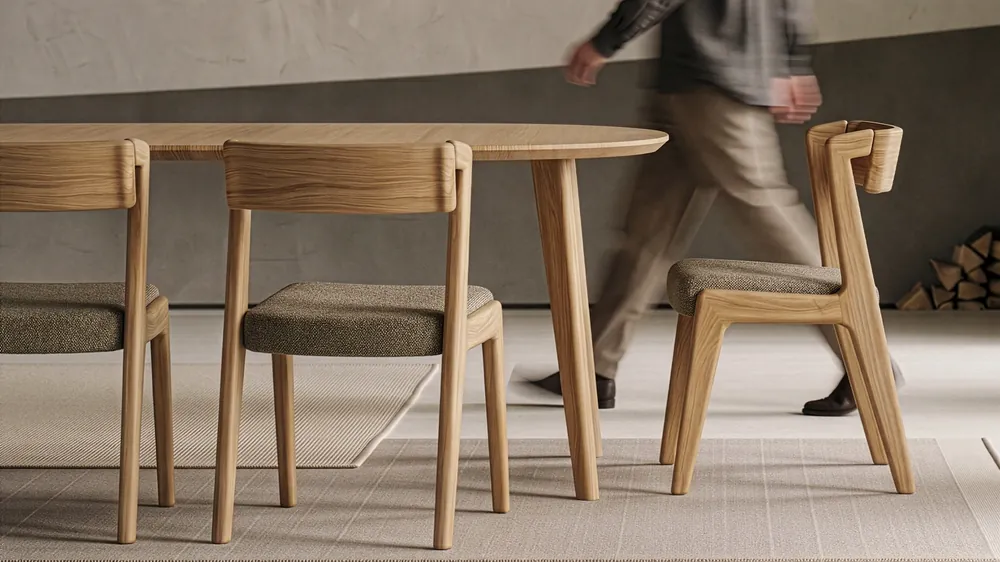
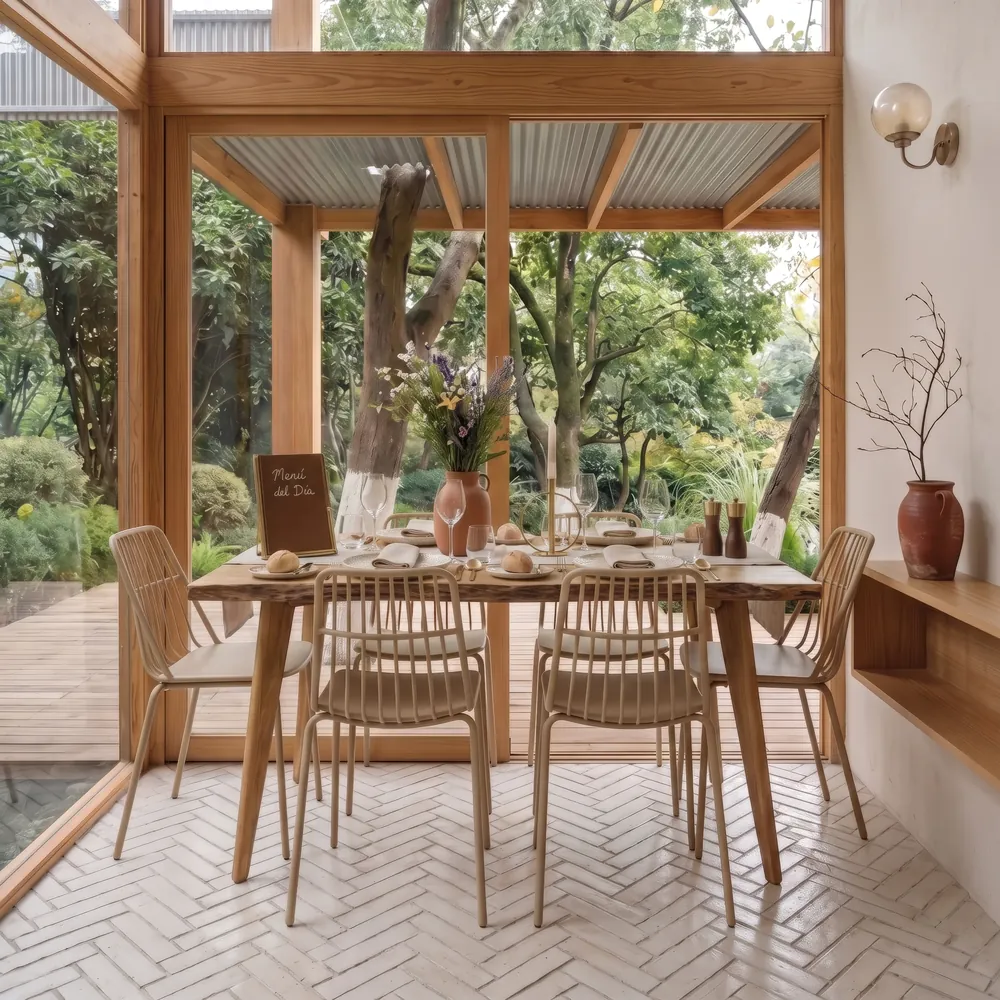
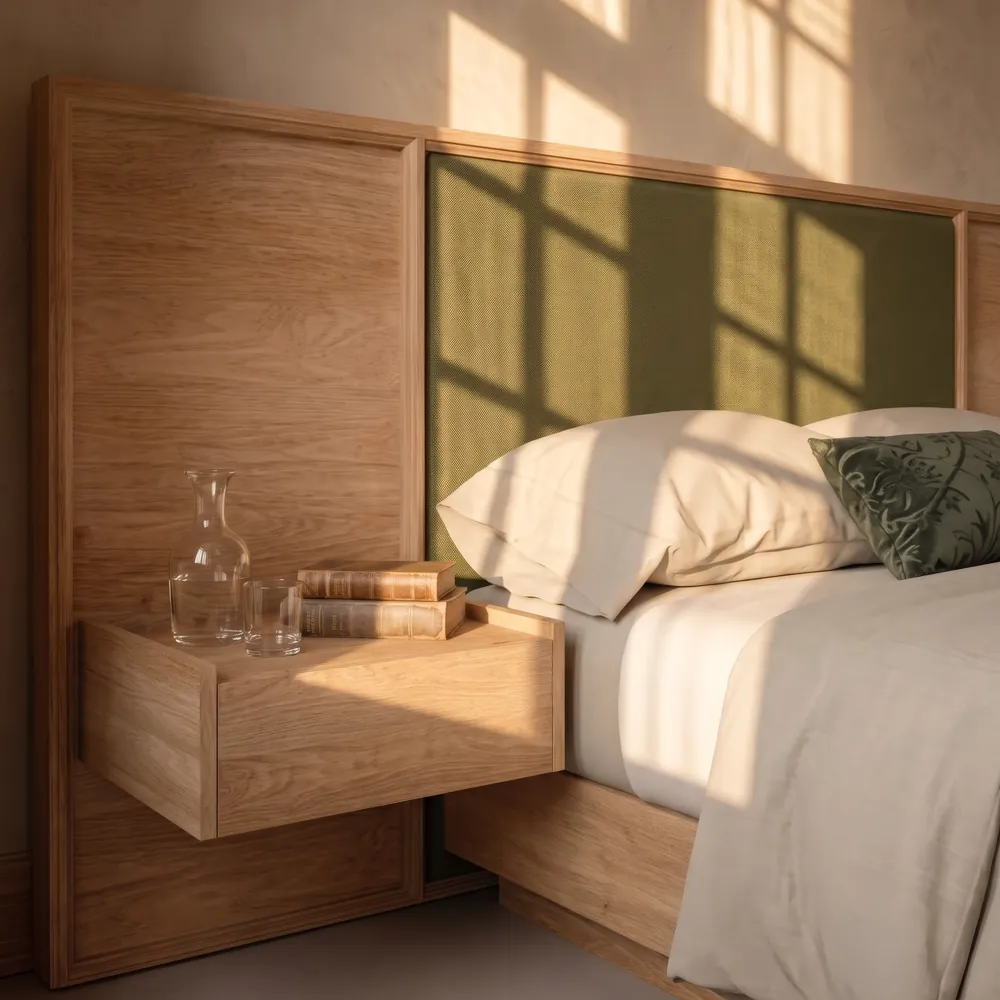
Digital precision at the service of cabinetmaking. We integrate CNC technology to handle complex geometries and optimize manufacturing processes. We transform blueprints and 3D models into physical pieces made of solid oak and engineered wood panels, maintaining strict control over cutting tolerances and preserving the integrity of the original design.
Technical Capabilities and Scope
2D and 3D Machining
Execution of complex geometries, organic textures, hollowing and machining of pockets for hidden technical fittings.
Noble and Technical Materials:
Our main focus is solid wood, complemented by the processing of phenolic plywood, high-density MDF and technical polymers (PVC).
Applications:
Production of architectural lattice screens, integrated panelling, contract furniture prototyping and spatial signage elements.
Our Process: From Geometry to Material
01. CAD/CAM Review and Strategy
We analyze your vector files (DXF, SVG) or three-dimensional models (STEP, STL). We adjust cutting paths and feed rates to optimize material and resolve structural junctions before starting production.
02. Machining and Cutting
We execute the cutting layout using a multi-head system. This technology allows us to make cuts, drill holes and engrave in a single cycle, maintaining exact dimensional consistency both in one-off pieces and in furniture series.
03. Assembly and Manual Treatment
Technology cuts, but craftsmanship finishes the piece. The machined elements move to our workbenches for manual sanding, calibrating the joints and preparing the surface for its later finish.
For an accurate assessment, we require the files in vector format (DXF, DWG or SVG) or 3D models (STEP, STL). It's essential to indicate the wood species or board type, the thickness and the desired final finish. Our technical team will review feasibility and respond with a detailed proposal.
Although our standard of excellence is solid oak, we are equipped to machine a wide range of hardwoods and softwoods, as well as water-resistant panels, phenolic plywood, and synthetic materials such as PVC for signage or temporary architectural applications.
Gestionar consentimiento
Usamos cookies técnicas para que la tienda funcione y, solo si lo aceptas, cookies de análisis para mejorar la web
Funcional
Always active
El almacenamiento o acceso técnico es estrictamente necesario para el propósito legítimo de permitir el uso de un servicio específico explícitamente solicitado por el abonado o usuario, o con el único propósito de llevar a cabo la transmisión de una comunicación a través de una red de comunicaciones electrónicas.
Preferencias
El almacenamiento o acceso técnico es necesario para la finalidad legítima de almacenar preferencias no solicitadas por el abonado o usuario.
Estadísticas
El almacenamiento o acceso técnico que es utilizado exclusivamente con fines estadísticos.El almacenamiento o acceso técnico que se utiliza exclusivamente con fines estadísticos anónimos. Sin un requerimiento, el cumplimiento voluntario por parte de tu proveedor de servicios de Internet, o los registros adicionales de un tercero, la información almacenada o recuperada sólo para este propósito no se puede utilizar para identificarte.
Marketing
El almacenamiento o acceso técnico es necesario para crear perfiles de usuario para enviar publicidad, o para rastrear al usuario en una web o en varias web con fines de marketing similares.