

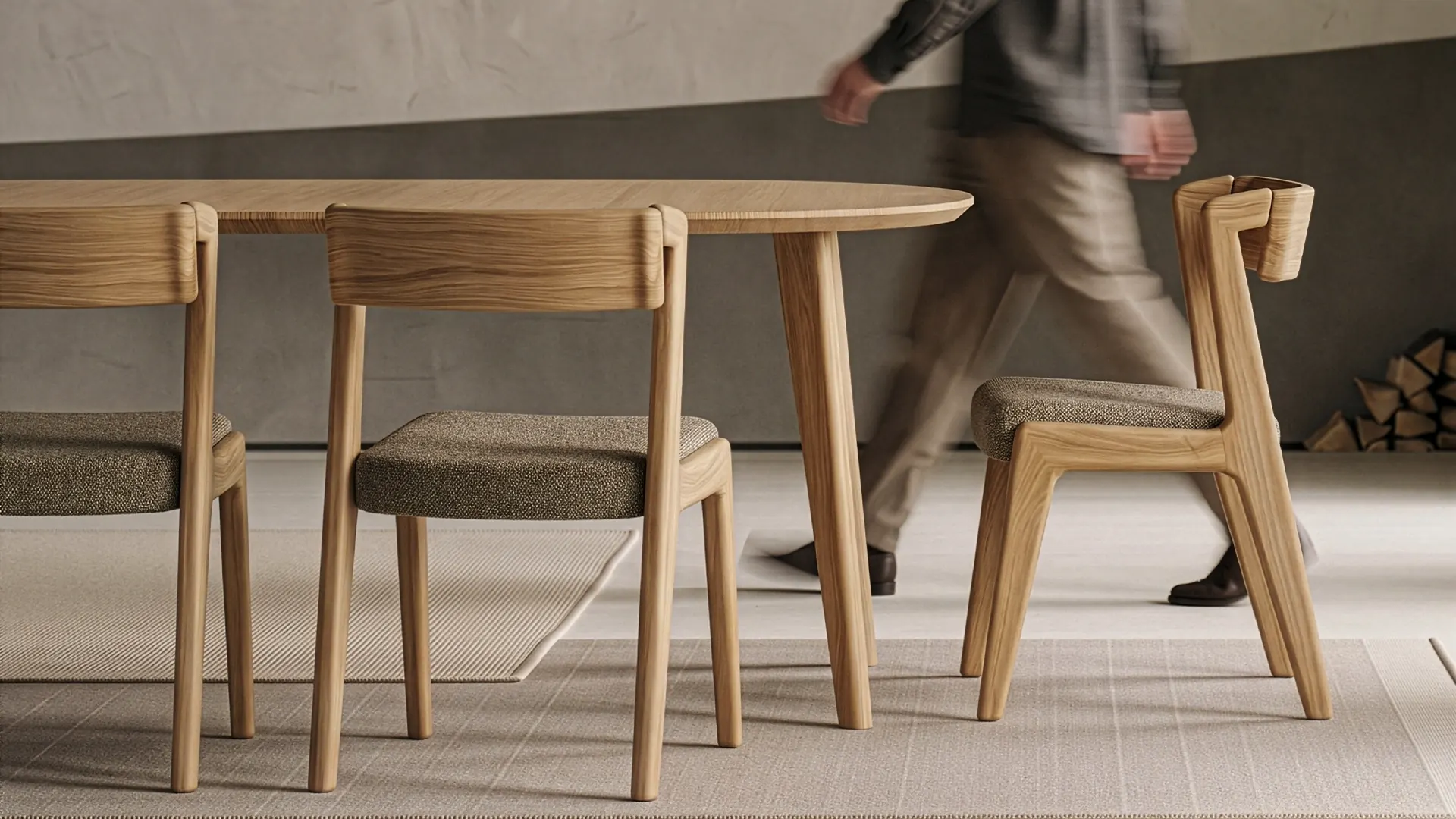
How to care for a
solid wood table (and keep it the same in 20 years)
A solid wood table isn't delicate. Quite the opposite: it's made to withstand decades of dinners, homework, laptops and glasses. But it does have a couple of rules, and almost all the damage we see comes from not knowing them.
That's what this guide is about. It's short on purpose, because the real upkeep of a well-finished table is short too.
Day to day: a cloth and little else
Our pieces have a invisible high-hardness varnish that creates a waterproof layer over the wood. That layer does the work: it stops liquids getting into the fibre and stains from setting.
So the routine is simple:
- Wipe with a microfibre or cotton cloth lightly dampened with water.
- If there's grease, add a drop of mild soap to the water.
- Always dry afterwards with a dry cloth. This is the step that matters.
Nothing else is needed. And no, you don't need to oil it: oil is the upkeep for oil-finished woods, not varnished ones.
Putting oil on varnish doesn't nourish it; it leaves a sticky film that traps dust and dulls the sheen.
What to avoid
A short list with no exceptions:
- Abrasive or solvent-based products. Glass cleaners with ammonia, alcohol, acetone, harsh degreasers. They attack the varnish, which is exactly what protects the wood.
- Scourers and rough cloths. They scratch the finish even if you don't see it on day one.
- Standing water. A glass sweating all afternoon or a puddle from the mop under a leg. Varnish withstands contact, not soaking.
- Direct heat. Dishes straight from the oven, coffee pots, irons. Always use trivets: white heat marks are the hardest to remove.
- Dragging objects. Ceramics without felt, metal laptop bases, vases. Lift them instead of sliding them.
Specific stains
The sooner you act, the easier it is. Almost all come off with water and mild soap if you don't give them time.
| Stain | What to do |
|---|---|
| Wine, coffee, sauce | Blot with paper without rubbing (rubbing spreads it), then a damp cloth with a drop of soap, and dry. |
| Grease | Warm mild soap. If a trace remains, repeat; don't move to a stronger product. |
| Limescale from a glass or vase | A damp cloth and dry immediately. No vinegar or lemon on the varnish. |
| Ink or marker | Try water and soap first. If it doesn't come off, write to us before using any solvent. |
| White ring from moisture or heat | It's not dirt, it's the varnish affected. Don't rub: ask us and we'll tell you how to treat it. |
Wood moves, and that's normal
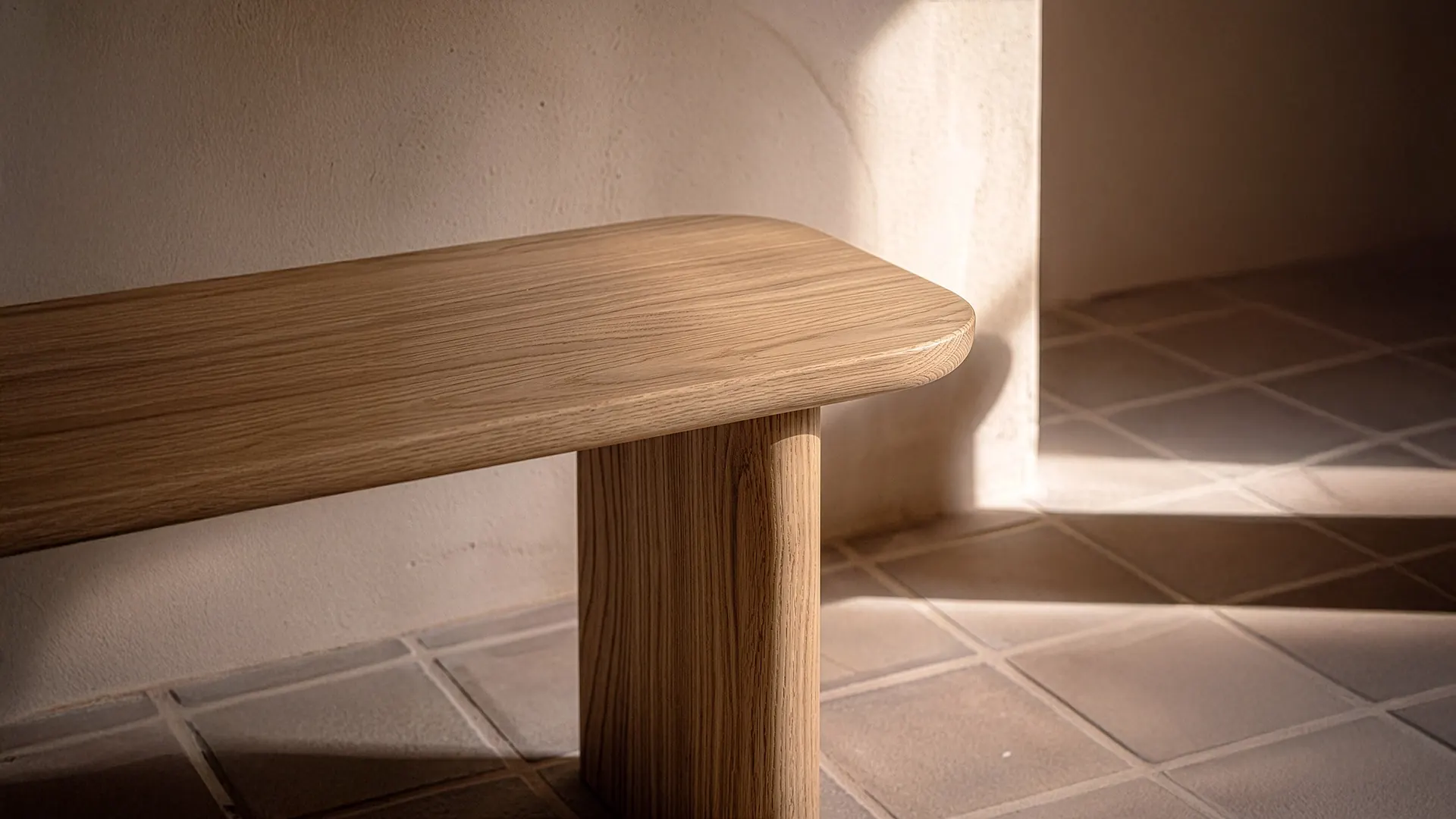
It's what surprises people most when they're used to mass-produced furniture. Solid wood keeps reacting to the humidity in the air: it expands in summer and contracts when heating dries the house in winter.
That's why you may notice, especially in the first winter, small changes in the joints of the top. It's not a defect or a manufacturing fault: it's real wood doing what wood does. The internal reinforcements in our tops are there precisely so that this movement doesn't distort the piece.
You can help it with three habits:
- Don't put it right against a radiator or right on top of underfloor heating at full blast.
- Avoid constant direct sunlight. Wood lightens or darkens unevenly, and if there's a tablecloth or an object left on top, its outline shows.
- Keep your home at a reasonable humidity, between 40% and 60%. It's the same range that feels comfortable for people.
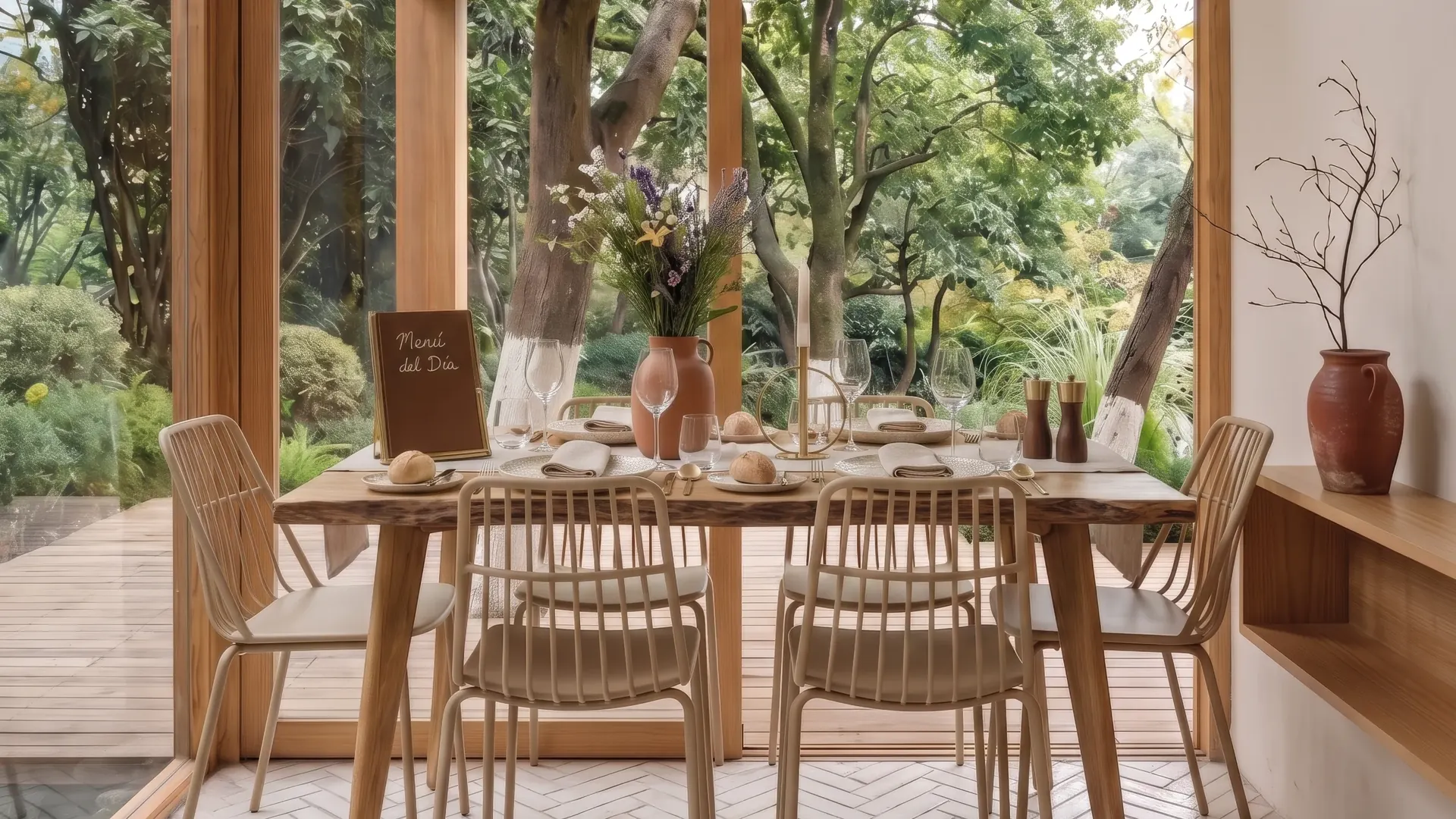
A mark isn't a flaw. A table that's used gathers signs, and in solid wood that doesn't ruin it: it tells its story.
Knocks, marks and second lives
Here's the real advantage of solid wood over chipboard or thin veneer: almost everything can be fixed.
- Surface marks: there are repair waxes that match the tone without touching the rest of the finish. If you have one of our pieces and this has happened, ask us and we'll tell you which to use.
- Deeper scratches: they're sanded and the area is refinished.
- After many years: a solid table can be sanded all over and re-varnished, and even change colour. It starts again.
And if something goes wrong
All our pieces have a legal guarantee. If you see damage to the packaging when your order arrives, note it on the carrier's delivery note and let us know within 24 hours: that way we handle it as a shipping incident and it's much faster.
For any questions about your piece, write to us on WhatsApp or from the contact page. We answer from the workshop, so the person replying knows how your table was made.
If you'd like to understand how the finish that protects your piece works, we explain it in "High-resistance lacquers and finishes".
FAQ
Do you need to oil a solid wood table?
Only if it has an oil finish. Our pieces have a hard-wearing varnish, and oil doesn't penetrate varnish: it leaves a sticky film that traps dust. A damp cloth and drying afterwards is enough.
What do I do if I spill wine on the table?
Blot with paper without rubbing, clean with a damp cloth and a drop of mild soap, and dry. The varnish stops the liquid getting into the wood, so the sooner you act, the easier it is.
Can a scratch be removed?
Usually, yes. Surface marks are evened out with repair waxes and deeper ones are sanded and refinished. That's the advantage of solid wood: almost everything can be fixed.
A question about your piece?
Write to us and someone from the workshop will reply. And if you're still choosing, samples are the quickest way to get the finish right.